

What Is the Difference Between CBT and DBT?

Choosing between CBT and DBT for mental health support depends on focus and personal needs rather than effectiveness. CBT works by helping us shift unhelpful thought patterns. DBT expands on that, building emotional management and relationship tools through both individual and group sessions.
Key Takeaways
- CBT (Cognitive Behavioral Therapy) reshapes negative thought habits to improve how we feel and act.
- DBT (Dialectical Behavior Therapy) blends acceptance and change, with strong attention to managing emotions and building social skills.
- CBT usually involves one-on-one sessions and structured exercises between meetings.
- DBT combines group strategies with individual coaching for a fuller approach.
- CBT often suits anxiety, obsessive thinking, perfectionism, or constant self-criticism.
- DBT tends to help those dealing with overwhelming emotions, trauma recovery, or ongoing relationship conflict.
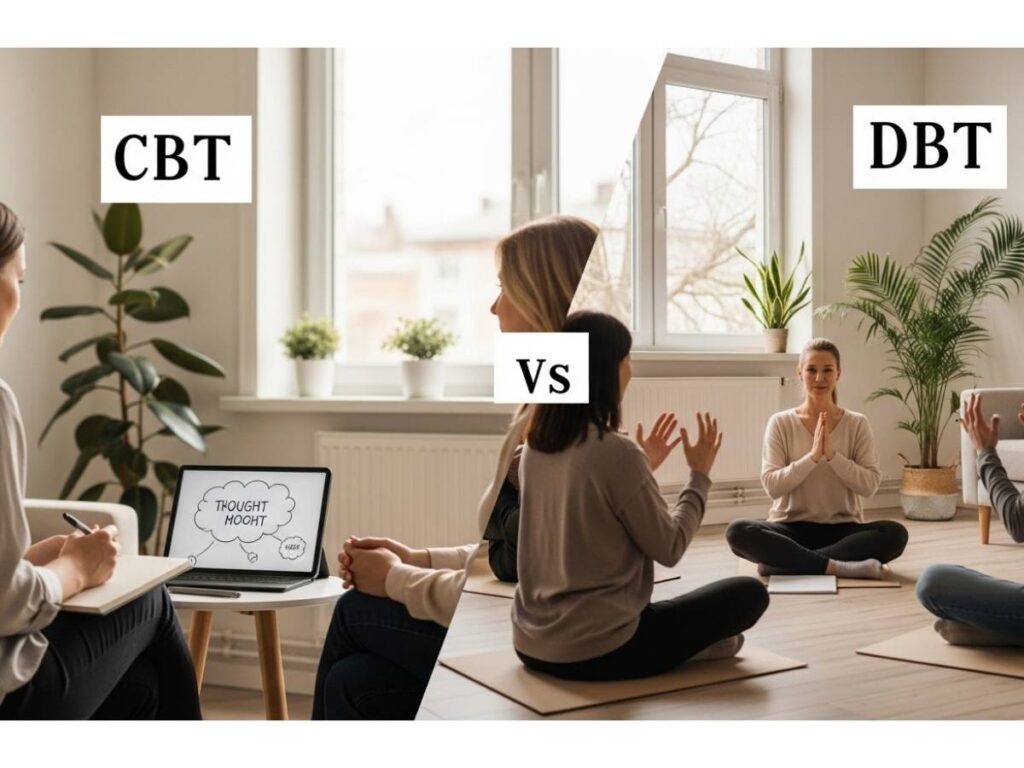
What Makes CBT and DBT Different? A Compassionate Side-by-Side Look
Let’s begin by gently sorting through the difference between CBT and DBT, so you can see both options clearly. Both approaches are grounded in strong clinical evidence, as outlined by the National Institute of Mental Health, and have helped many people create more peaceful, meaningful lives. Still, the structure, tools, and emotional focus vary in ways that can make one a better fit depending on what you’re working through.
Here’s a side-by-side snapshot to help you compare CBT and DBT at a glance:
| Feature | CBT (Cognitive Behavioral Therapy) | DBT (Dialectical Behavior Therapy) |
|---|---|---|
| Focus | Identifying and shifting unhelpful thoughts | Balancing acceptance and change through emotional skill-building |
| Approach | Change-focused | Validation plus change |
| Format | Usually individual with homework | Combination of individual and group sessions |
| Goals | Improve mood and behavior by reframing thinking | Strengthen emotional regulation, tolerance, and relationships |
Both therapies are incredibly valuable—but which one may support you best depends on your inner experiences and what kind of healing feels most nurturing right now.

Real-Life Examples: When Might CBT or DBT Help?
Let’s bring these two approaches to life with everyday stories. You might recognize your own experience here—or maybe that of someone you care about.
When Might CBT Help?
CBT often helps when thoughts feel overpowering or paralyzing. It supports people in gently challenging old beliefs and learning how thoughts connect to emotions and behaviors.
- A teenager constantly spiraling into “what if something goes wrong?” might benefit from CBT to identify thinking traps and practice calming strategies.
- An adult with recurring thoughts like “I’ll never get it right” could use CBT to reframe those beliefs and build new routines for self-care.
- Someone living with a fear of failure might use CBT’s structured tools to gradually shift those fears into more balanced perspectives.
When Might DBT Help?
DBT shines in emotionally overwhelming spaces. It doesn’t ask people to shut down emotions—it teaches skills to feel them safely and respond with care.
- A person who feels emotional pain so intensely that it leads to impulsive choices or deep shutdown may learn how to self-soothe in healthier ways.
- Someone managing trauma triggers might use DBT’s emotional regulation practices to stay grounded and present.
- A couple struggling with conflict may learn new communication tools through DBT’s interpersonal effectiveness skills. (You can also explore how couples therapy supports marriage healing.)
Both approaches can be vital parts of healing—your story helps determine the way forward.

How CBT Works: Reframing Thoughts to Support Change
CBT, or Cognitive Behavioral Therapy, is based on the idea that our thoughts, feelings, and actions are connected, a framework described by the American Psychological Association. When we notice and shift our thoughts, we can often shift how we feel and how we respond to life.
This pattern is called the “cognitive triangle,” and it can be an empowering lens to work through moments that feel stuck or painful.
Tools You Might Use in CBT
CBT gives us specific, supportive strategies, many of which you can practice between sessions:
- Journaling to notice thought patterns
- “Thought records” that help track and challenge anxious thinking
- Activity planning to gently move through low-energy days
- Setting small, realistic goals and celebrating success along the way
CBT has been especially meaningful for people experiencing anxiety, OCD, perfectionism, phobias, or burnout. It also supports those confronting persistent anxiety or self-defeating beliefs.

How DBT Works: Building Skills for Emotional Regulation and Resilience
DBT, or Dialectical Behavior Therapy, extends the foundation of CBT with deeper focus on emotions and relationships. At its heart, DBT teaches that two things can be true at once—we can accept ourselves fully and still work toward change.
This therapy is especially affirming for those who’ve been told they’re “too emotional” or felt punished for needing support.
Key Components of DBT
DBT is organized into four core skill areas:
- Mindfulness: Noticing your feelings and thoughts non-judgmentally
- Distress Tolerance: Getting through painful moments without making them worse
- Emotional Regulation: Understanding and balancing intense feelings
- Interpersonal Effectiveness: Learning how to express needs and maintain boundaries
These skills are often taught in groups, where clients learn from one another, as well as one-on-one sessions. Whether you’re facing big emotional swings, relationship strain, or chronic shame, these tools offer gentle structure and real hope.
DBT has helped many people, including those living with complex trauma, suicidal thoughts, and behaviors often diagnosed as borderline personality disorder, as described by the Mayo Clinic’s overview of dialectical behavior therapy. If this feels close to your experience, you deserve compassion—not blame—and thoughtful care.

Choosing the Right Fit: Your Needs, Your Path
Choosing between CBT and DBT doesn’t mean choosing “right” or “wrong.” It means checking in with what emotions and patterns are showing up most strongly for you—and what kind of support you’re hoping to receive.
For clarity, consider these two short lists.
When Might CBT Help?
- You feel stuck in worry loops or rigid thinking patterns.
- You tend toward self-blame or harsh inner self-talk.
- You want structured tools that help track and shift thoughts.
When Might DBT Help?
- You often feel emotionally overwhelmed, reactive, or shut down.
- You struggle with relationships or feel easily misunderstood.
- You want to strengthen coping skills and feel more stable in distress.
The truth is, many therapists gently combine skills from both CBT and DBT to support the whole person. There’s no need to decide everything right now. Just beginning the process—curious and open-hearted—is enough.
To learn more about how CBT for teens or our other options support healing at different life stages, we invite you to keep exploring.

Therapy Is Available Here In Idaho Falls—When You’re Ready
We know that these decisions often come during tender moments. You don’t need to have it all figured out. What matters is that you’re taking a step—any step—into your own healing.
At Aspen Mental Health Services, we offer both adult therapy services and care for children and adolescents. Our compassionate team is trained in both CBT and DBT approaches and practices in alignment with standards set by the Idaho Board of Psychologist Examiners, and we’re here to support whatever path feels most grounded for you
Whether you’re coping with anxiety, working through depression, or wondering how to get help for someone you love, our therapists gently guide without pressure. You can always start by simply reaching out for a conversation.
You’re not alone. There is support. And there’s strength in choosing to begin. For more guidance, stories, and resources, visit our mental health blog.
Frequently Asked Questions
CBT is often considered a first-line treatment for anxiety and depression, according to guidance from the National Institute of Mental Health, because it focuses on identifying and changing negative thought patterns. It helps reduce worry, rumination, and low mood by teaching practical coping tools. DBT can also support depression and anxiety, especially when intense emotions or relationship difficulties are part of the experience.
Yes, CBT and DBT techniques are often combined in therapy. Many clinicians integrate cognitive restructuring from CBT with emotion regulation and distress tolerance skills from DBT. This blended approach can support both unhelpful thinking patterns and emotional overwhelm, creating a more comprehensive mental health treatment plan.
CBT is typically short-term, often lasting 8 to 20 sessions depending on goals and symptom severity. DBT is usually longer and more structured, sometimes lasting six months to a year or more. DBT often includes weekly individual therapy and group skills training, which extends the overall commitment.
DBT may be a better fit for individuals who experience intense mood swings, impulsive behaviors, or chronic relationship conflict. It is especially helpful for people coping with trauma, self-harm urges, or emotional dysregulation. While CBT focuses on changing thoughts, DBT emphasizes managing overwhelming emotions and improving interpersonal effectiveness.
The main difference between CBT and DBT in mental health care is their structure and focus. CBT sessions are usually individual and centered on challenging distorted thinking with homework exercises. DBT includes both individual therapy and group skills training, with a strong emphasis on acceptance, mindfulness, and coping during distress.